Flood Risk Assessment Manchester
Professional flood risk assessments in Manchester. River Irwell and Mersey catchment modelling, surface water drainage, SuDS design and LLFA consultation.
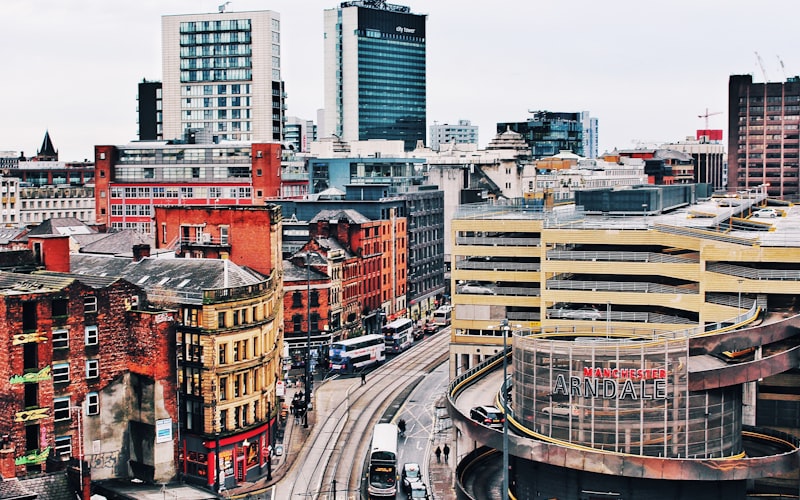
Manchester sits at the confluence of multiple river systems within one of England’s wettest urban areas. The city receives substantially more rainfall than the national average, with annual totals regularly exceeding 1,000mm in parts of the wider conurbation. This high rainfall, combined with the heavily urbanised nature of the Irwell, Medlock and Mersey catchments, creates significant flood risk from both fluvial and surface water sources that must be carefully assessed and managed in all development proposals.
The River Irwell, Manchester’s principal watercourse, flows through the city centre and has a long history of flooding. Its catchment drains the Pennine hills to the north, and the rapid runoff from these steep, often saturated uplands generates fast-rising flood peaks that can reach the city within hours of heavy rainfall. The catastrophic flooding of Boxing Day 2015 demonstrated the Irwell’s destructive potential, when record river levels flooded over 2,300 properties across Greater Manchester and caused hundreds of millions of pounds in damage.
Surface water flooding adds a further dimension to Manchester’s flood risk. The city’s extensive impermeable coverage — rooftops, roads, car parks and commercial hardstanding — generates significant volumes of surface runoff during intense rainfall. Manchester’s topography, with its river valleys and undulating terrain, concentrates this runoff in low-lying areas where ponding and flooding can be severe. The interaction between overwhelmed surface water drainage and high river levels during storm events creates compound flood risk that requires integrated assessment.
Flood Risk Sources in Manchester
Fluvial Flooding
The River Irwell dominates Manchester’s fluvial flood risk. Rising on the moors above Bacup, the Irwell descends rapidly through a heavily urbanised catchment before flowing through the city centre and into Salford. Its tributaries — the Irk flowing from the north and the Medlock from the east — contribute additional flood flows. Environment Agency Flood Zone mapping shows extensive areas of Flood Zone 2 and 3 along the Irwell corridor through central Manchester and into Salford. South Manchester is affected by the River Mersey and its tributaries, including the River Bollin and Sinderland Brook, with significant floodplain areas in Didsbury, Northenden and Chorlton.
The Manchester, Salford and Trafford Flood Alleviation Scheme has reduced flood risk along the Irwell, but residual risk behind flood defences must still be assessed. Defence breach and overtopping scenarios are relevant for sites within the defended floodplain.
Surface Water Flooding
Manchester’s high annual rainfall and extensive impermeable surfaces combine to create significant surface water flood risk. The city’s drainage network, a mix of Victorian combined sewers and more modern separate systems, has finite capacity. When rainfall intensity exceeds this capacity, surface water accumulates on streets, in low-lying areas and in topographic depressions. Manchester’s SFRA identifies multiple surface water flood risk hotspots across the city, and the risk is expected to increase with climate change as rainfall intensities rise.
Groundwater Flooding
Groundwater flooding in Manchester is generally localised, affecting areas where superficial river valley deposits — sands and gravels laid down by the rivers — are close to the surface. These deposits can become saturated during prolonged wet periods, causing groundwater emergence. Areas along the Irwell, Medlock and Mersey valleys are most susceptible. Groundwater levels can also be influenced by historical mine workings beneath parts of the city and wider conurbation.
Canal Flooding
Manchester’s canal network, including the Manchester Ship Canal, Bridgewater Canal and Rochdale Canal, can interact with flood risk. While canals are managed water systems, they can receive uncontrolled inflows during storm events and may overtop or breach. The Manchester Ship Canal also serves as a flood relief channel for the River Irwell under extreme conditions. Development adjacent to canals requires assessment of breach and overtopping risk in consultation with the Canal and River Trust.
Planning Requirements
Manchester’s planning framework for flood risk is governed by the NPPF (Chapter 14), supported by Manchester City Council’s Local Plan policies and the city’s Strategic Flood Risk Assessment.
The Sequential Test must be applied to direct development to areas of lowest flood risk. For major regeneration projects in the city centre, where much of the available development land is within or adjacent to the Irwell floodplain, the Sequential Test is applied at a strategic level through the Local Plan, with individual sites then subject to the Exception Test where necessary. The Exception Test requires demonstration that the development provides wider sustainability benefits and will be safe for its lifetime, taking account of climate change.
Manchester City Council, as Lead Local Flood Authority, is responsible for local flood risk management and is a statutory consultee on surface water drainage for major developments. The council expects drainage strategies to follow the SuDS hierarchy, achieve restricted discharge rates, and incorporate multi-functional SuDS that deliver water quality, biodiversity and amenity benefits alongside flood risk management.
The Environment Agency is a statutory consultee for developments in Flood Zones 2 and 3. For sites near the Irwell flood defences, the EA requires assessment of residual risk from defence breach or overtopping. Pre-application engagement with both the LLFA and EA is recommended for complex schemes.
The Greater Manchester Combined Authority’s strategic planning framework, including Places for Everyone, influences flood risk policy across the conurbation, with emphasis on natural flood management, catchment-wide approaches and green-blue infrastructure integration.
Key Flood History
Boxing Day 2015 — Storm Eva
On 26 December 2015, Storm Eva brought prolonged intense rainfall to the Irwell catchment following weeks of wet weather from Storm Desmond earlier in the month. The River Irwell reached record levels, exceeding the previous highest recorded level by a significant margin. Over 2,300 properties were flooded across Greater Manchester, with Salford, central Manchester, Radcliffe and Ramsbottom among the worst-affected areas. The event caused estimated damages exceeding £500 million and led to the acceleration of the Manchester, Salford and Trafford Flood Alleviation Scheme.
July 2019 Flash Flooding
On 31 July 2019, an intense thunderstorm delivered a month’s worth of rain in an hour across parts of Manchester. Surface water flooding affected the Northern Quarter, Piccadilly and surrounding areas. The event demonstrated the vulnerability of Manchester’s city centre to flash flooding from intense convective storms, where the drainage network’s capacity is rapidly overwhelmed.
January 2021 Storm Christoph
Storm Christoph (19-21 January 2021) brought sustained heavy rainfall to north-west England. River levels on the Irwell and Mersey rose significantly, and the recently constructed flood defences along the Irwell were tested. While the defences performed as designed, some areas experienced surface water and minor fluvial flooding. The event demonstrated the value of the flood alleviation scheme investment.
November 1946 Historic Flood
The November 1946 Irwell flood remains one of the most significant historical flood events in Manchester. Prolonged rainfall caused the Irwell and its tributaries to burst their banks, flooding large areas of Salford and Manchester. The event informed subsequent flood defence planning for the Irwell corridor.
Our Services in Manchester
Flood Risk Assessments
Aegaea delivers flood risk assessments for development projects across Manchester, from single-dwelling applications to major city centre regeneration schemes. Our assessments address all relevant flood sources and are prepared in full compliance with Manchester City Council’s requirements, the city’s SFRA and Environment Agency expectations. We produce Sequential and Exception Test evidence, site-specific FRAs and flood evacuation plans tailored to Manchester’s specific flood risk context.
Flood Modelling
Where existing Environment Agency models or flood mapping do not provide adequate detail for site-specific assessment, Aegaea undertakes bespoke hydraulic modelling. In Manchester, this includes detailed Irwell, Medlock and Mersey flood modelling using TUFLOW and Flood Modeller, surface water modelling to assess overland flow routes and ponding depths, and defended scenario modelling to assess residual risk behind the Irwell flood defences.
Drainage Design and SuDS
Manchester’s emphasis on multi-functional SuDS aligns with Aegaea’s design approach. We develop drainage strategies that manage surface water at source through features including green roofs, bioretention systems, permeable paving and attenuation storage. Our designs satisfy Manchester City Council’s requirements for restricted discharge rates and SuDS integration while working within the practical constraints of urban development sites.
Highways Drainage
For developments involving highway works, Aegaea provides highways drainage design that meets adoptable standards. We prepare Section 38 and Section 278 drainage designs, highway flood risk assessments and road safety audits where drainage intersects with highway design. Our experience in Manchester includes highway drainage for residential access roads, commercial estate roads and public realm improvements.
Why Choose Aegaea for Your Manchester Project
Aegaea’s experience in Manchester spans the full range of development types, from apartment schemes in the city centre floodplain to residential estates in south Manchester’s Mersey corridor and commercial developments across the wider conurbation. We understand the specific flood risk challenges that Manchester presents — the flashy Irwell catchment, the interaction between fluvial and surface water flooding, and the implications of the flood alleviation scheme for development within the defended area.
Our relationships with Manchester City Council’s flood risk team, the Environment Agency’s Greater Manchester planning team and United Utilities’ developer services division enable effective consultation and technical dialogue throughout the project. When objections arise, we resolve them through evidence-based engagement that addresses the specific technical concerns raised.
Manchester’s ambitious regeneration programme depends on development within and adjacent to areas of flood risk. Aegaea provides the specialist technical input that enables this development to proceed safely and with planning confidence, managing flood risk appropriately while supporting the city’s growth and renewal.
Frequently Asked Questions: Manchester
Do I need a flood risk assessment in Manchester?
An FRA is required if your site is in Flood Zone 2 or 3, if the development is major (10+ dwellings or 1,000m²+), or if the site exceeds 1 hectare in Flood Zone 1. Manchester's SFRA also identifies areas of critical drainage concern where FRAs may be required for smaller developments.
What rivers cause flooding in Manchester?
The River Irwell is the primary fluvial flood source, running through the city centre. The River Medlock flows through the south of the centre, while the River Mersey and its tributaries affect south Manchester. The Irk in north Manchester also presents significant flood risk.
What happened during the Boxing Day 2015 floods in Manchester?
Storm Desmond (5 December) and Storm Eva (26 December 2015) caused severe flooding across Greater Manchester. The River Irwell reached record levels, flooding properties in Salford, the city centre and upstream communities. Over 2,300 properties were flooded across Greater Manchester, leading to major investment in flood defence infrastructure.
What drainage requirements does Manchester City Council set?
Manchester City Council requires new developments to restrict surface water discharge to greenfield runoff rates where practicable. The council follows the SuDS hierarchy and expects development to incorporate SuDS features that provide water quality, biodiversity and amenity benefits alongside flood risk management.
Does Manchester have a Strategic Flood Risk Assessment?
Yes. Manchester's SFRA maps all sources of flood risk across the city and provides the evidence base for planning decisions. It identifies areas where the Sequential and Exception Tests apply and sets out requirements for site-specific flood risk assessments.
What is the Manchester Flood Alleviation Scheme?
The Manchester, Salford and Trafford Flood Alleviation Scheme is a major infrastructure project designed to reduce flood risk from the River Irwell. It includes raised flood walls, flood gates and storage areas. Development near these defences must assess residual risk from defence breach or overtopping.
How does United Utilities involvement affect drainage in Manchester?
United Utilities is the water and sewerage company for Manchester. Development proposals connecting to the public sewer network require United Utilities pre-development enquiry. Their requirements for flow rates, connection points and capacity assessment must be integrated with the surface water drainage strategy.
Can Aegaea help with planning appeals related to flood risk in Manchester?
Yes. Aegaea has experience supporting planning appeals where flood risk or drainage matters are at issue. We provide expert evidence, technical rebuttals and, where necessary, expert witness support at appeal hearings and public inquiries.